
Allied Health Careers: A Guide for High School Families

What is allied health?
Allied health careers are all the patient-care and support roles in healthcare that are not doctors or registered nurses. These professionals help diagnose illnesses, treat and rehabilitate patients, manage health information, support mental health, and promote wellness. They work in settings like hospitals, clinics, schools, labs, rehab centers, and community programs.
Whether you are just beginning to explore career interests or already know you want to work in healthcare, understanding these options can help guide you with high school course selection, extracurricular activities, and college planning.
Allied Health Careers at a Glance
Here is a quick comparison of a few common allied health roles relevant to high school students in the U.S.
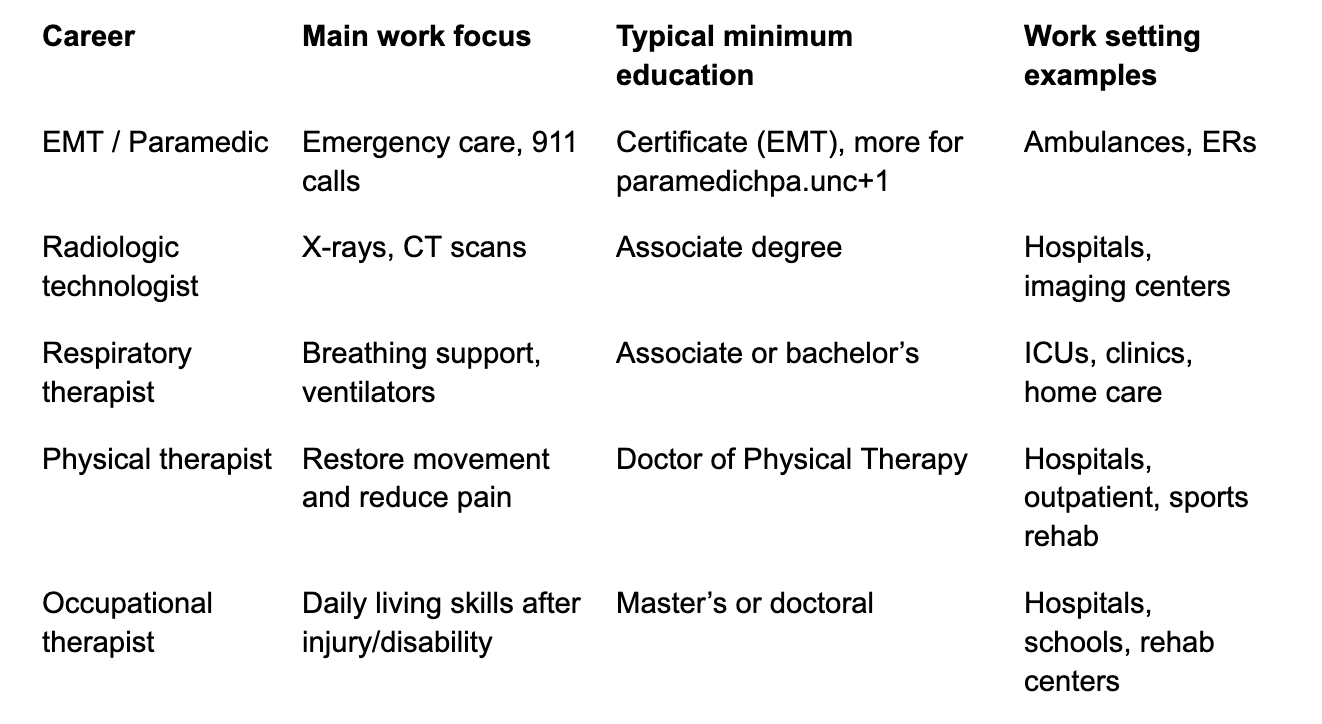
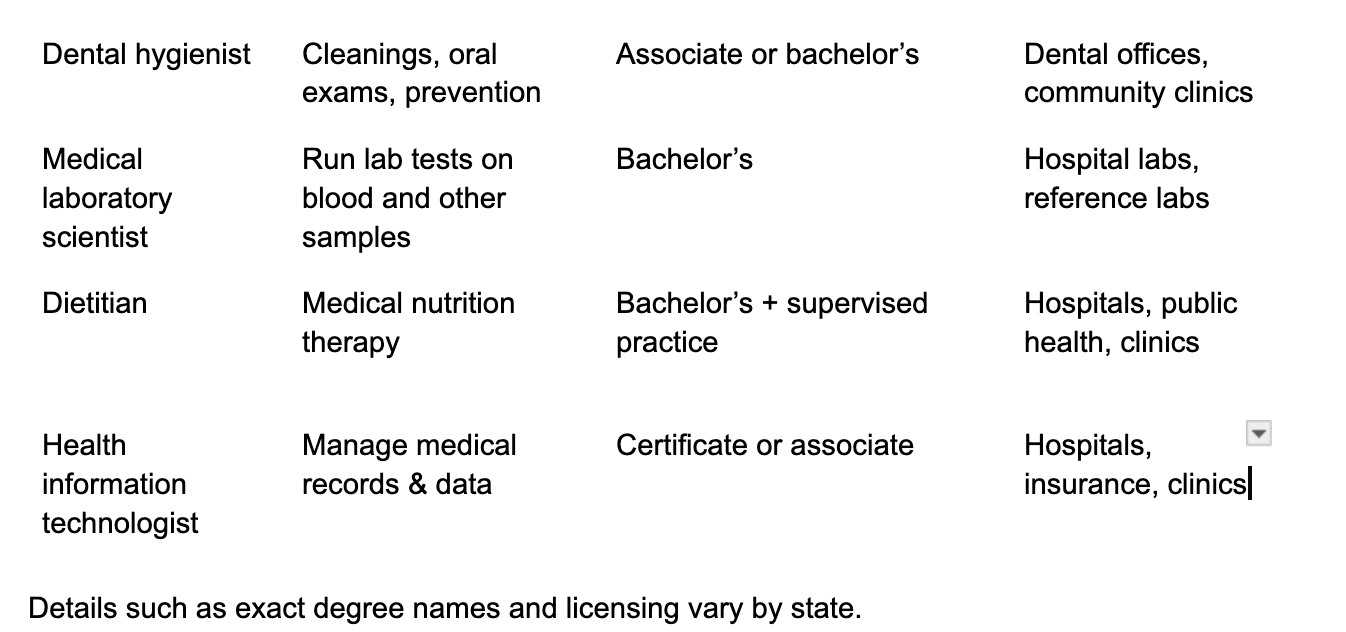
Source: explorehealthcareers
Is an Allied Health Career Right for You?
Students who thrive in allied health often enjoy:
✓ Science and biology
✓ Working with people
✓ Solving problems
✓ Technology
✓ Hands-on learning
✓ Lifelong learning
✓ Teamwork
✓ Making a meaningful impact

Spotlight on High-Demand Careers
Physical Therapist (PT)
Physical therapists help patients recover from injuries, surgeries, illnesses, and chronic conditions.
Typical responsibilities include:
Evaluating movement
Developing rehabilitation plans
Teaching exercises
Preventing future injuries
Helping patients regain independence
Ideal for students interested in:
Sports medicine
Orthopedics
Biomechanics
Exercise science
Occupational Therapist (OT)
Occupational therapists help people regain the ability to perform everyday activities after illness, injury, or disability.
They may work with:
Children
Older adults
Stroke survivors
Individuals with autism
Patients recovering from injuries
Physician Assistant (PA)
Physician Assistants diagnose illnesses, develop treatment plans, prescribe medications, and assist in surgeries under physician supervision.
Many students appreciate that PAs:
Can change specialties
Have shorter educational pathways than physicians
Enjoy excellent work-life balance
Have outstanding job demand
Speech-Language Pathologist (SLP)
Speech-language pathologists evaluate and treat communication and swallowing disorders.
They work in:
Schools
Hospitals
Private practice
Rehabilitation centers
Students who enjoy psychology, child development, language, and communication often find this career rewarding.
Diagnostic Medical Sonographer
Sonographers use ultrasound technology to create images used in medical diagnosis.
Common specialties include:
Obstetrics
Cardiology
Vascular imaging
Pediatrics
This profession combines patient care with advanced medical technology.

Medical Laboratory Technologist
Medical laboratory technologists analyze blood, tissue, and other laboratory samples that help physicians diagnose disease. Students who enjoy chemistry, biology, lab work, and research are well-suited for this career.
Other Important Allied Health Careers
Diagnostic & Imaging
MRI Technologist
CT Technologist
Nuclear Medicine Technologist
Mammography Technologist
Cardiovascular Technologist
Rehabilitation
Physical Therapist Assistant
Occupational Therapy Assistant
Prosthetist
Orthotist
Recreational Therapist
Patient Care
Respiratory Therapist
Radiation Therapist
Genetic Counselor
Child Life Specialist
Certified Anesthesiologist Assistant (where licensed)
Nutrition & Wellness
Registered Dietitian
Exercise Physiologist
Health Educator
Laboratory Sciences
Cytotechnologist
Histotechnologist
Cytogenetic Technologist
High School Preparation
Rigorous Coursework
Biology
Chemistry
Physics
Anatomy & Physiology (if available)
Statistics
Psychology
Health Science electives
Extracurricular Activities
HOSA – Future Health Professionals
Science Olympiad
Research
Health career academies
Volunteer work
Volunteer Experiences
Hospitals
Nursing homes
Rehabilitation centers
Special Olympics
Community health clinics
Camps for children with disabilities
Job Shadowing
One of the best ways to explore healthcare careers is through observation.
Students can shadow:
Physical therapists
Physician assistants
Occupational therapists
Speech-language pathologists
Medical laboratory professionals
Sonographers
Radiologic technologists
Even one day of shadowing can provide valuable insight into daily responsibilities and help you determine whether a particular profession is a good fit.

Choosing the Right College
When evaluating colleges, families should consider:
Strength of science programs
Undergraduate research opportunities
Clinical partnerships
Internship opportunities
Advising for pre-health students
Acceptance rates into graduate health programs
Opportunities for undergraduate shadowing
Faculty mentoring
Class sizes
Some students pursue direct-entry bachelor’s degree programs, while others complete a bachelor's degree and will then pursue graduate or professional school.
How to Choose the Right Path
To narrow down options, ask yourself a few questions:
Do you like direct patient contact, or prefer working with technology/data?
Patient‑heavy: PT, OT, respiratory therapy, dental hygiene, speech‑language pathology, EMT.
Tech/data‑heavy: imaging (X‑ray, ultrasound), medical lab science, health information management.
Do you handle emergencies well, or prefer a calmer environment?
Fast‑paced: EMT, paramedic, ER tech, surgical tech.
Steady pace: outpatient rehab, dental offices, imaging centers, health information.
How much school do you want (and can you afford) before working full‑time?
Shorter: EMT, medical assistant, phlebotomist, some imaging or health information roles via associate degrees.
Longer: PT, OT, PA, speech‑language pathology.
Source: explorehealthcareers

Helpful Resources
To learn more about me or my services, visit my website.
For the latest tips and advice, be sure to follow along on my social media.